
Hotline Order:
+92 300 5673567
Email ID:
info@qemti.com
Centrifuge Machine
Share:
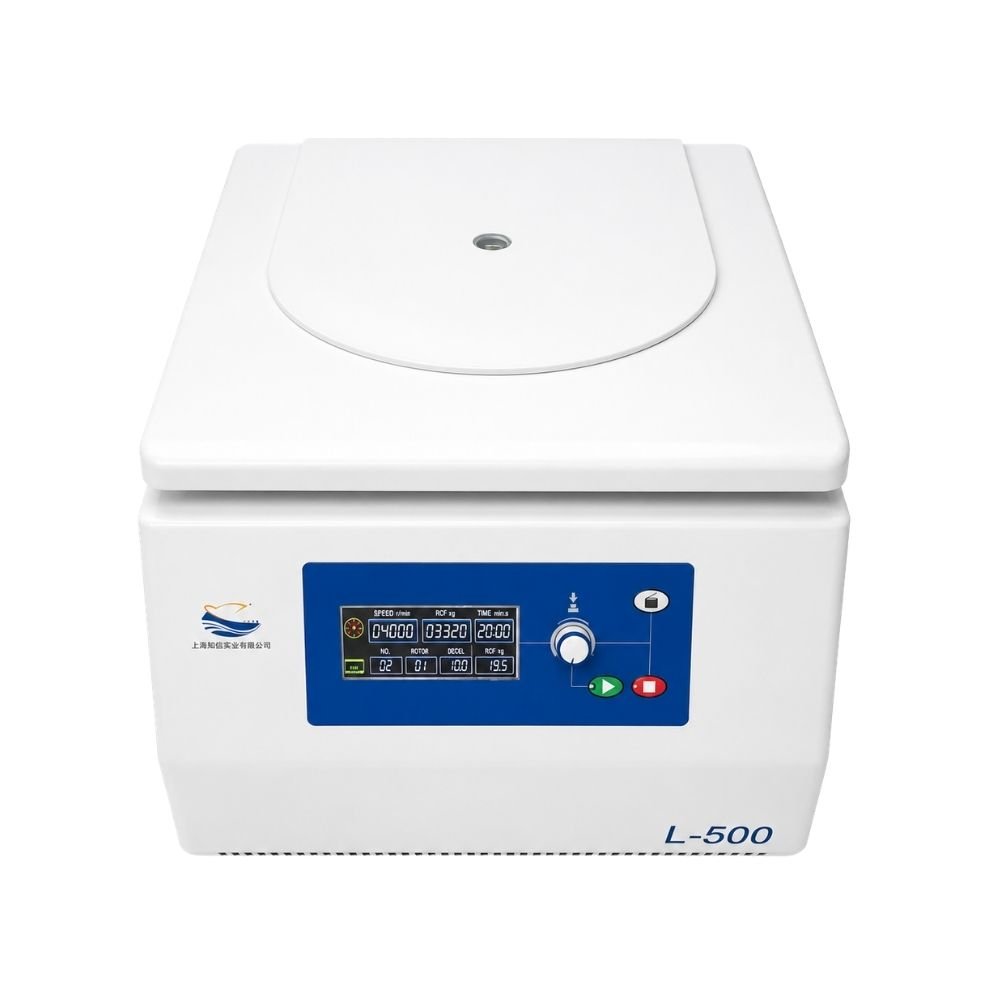
 Centrifuge Machine
Hotline Order:
(+101) 5620 - 8155
Email ID:
xstore@support.com
A centrifuge machine is an essential laboratory device used to separate components of liquid samples according to their density. It is widely used in medical laboratories, hospitals, diagnostic centers, research laboratories, blood banks, universities and healthcare facilities.
A modern laboratory centrifuge machine uses controlled rotational speed to separate materials such as blood components, serum, plasma and other laboratory samples. Different centrifuge models are designed for different applications, sample volumes, speeds and laboratory requirements.
For laboratories looking for a centrifuge machine in Pakistan, selecting the right model requires consideration of speed, rotor capacity, sample type, operating controls, safety features and intended application.
What Is a Centrifuge Machine?
A centrifuge machine is laboratory equipment that rotates samples at high speed to separate substances with different densities.
When a sample is placed inside a centrifuge tube and rotated, centrifugal force causes heavier components to move outward while lighter components remain closer to the center. This separation process allows laboratory professionals to obtain specific components from a sample.
For example, centrifugation can be used to separate plasma or serum from blood samples, depending on the sample preparation and laboratory protocol.
Centrifuges are available in many configurations, including:
- Benchtop centrifuges
- Laboratory centrifuges
- Clinical centrifuges
- High-speed centrifuges
- Refrigerated centrifuges
- Microcentrifuges
- Blood centrifuges
- PRP centrifuges
- Industrial centrifuges
The appropriate type depends on the laboratory’s requirements.
Centrifuge Machine in Pakistan
The demand for centrifuge machines in Pakistan comes from hospitals, diagnostic laboratories, pathology labs, research institutions, universities and medical facilities.
A centrifuge can be an important part of a laboratory workflow where sample separation is required.
Pakistan’s medical and laboratory equipment market includes compact benchtop centrifuges as well as advanced systems designed for higher-speed and specialized applications.
When purchasing a centrifuge machine, laboratories should focus on the actual technical requirements rather than selecting a machine only according to price.
How Does a Laboratory Centrifuge Work?
The basic principle of centrifugation is relatively straightforward.
Samples are placed into centrifuge tubes, which are positioned inside a rotor. The rotor spins at a controlled speed, generating centrifugal force.
The force causes particles or components with different densities to separate.
The separation process depends on factors such as:
- Rotational speed
- Relative centrifugal force (RCF)
- Centrifugation time
- Sample density
- Rotor type
- Tube size
- Sample volume
- Temperature
Laboratory professionals select the appropriate settings according to the sample and testing protocol.
What Is a Laboratory Centrifuge Used For?
A laboratory centrifuge machine has applications across many areas of healthcare and scientific research.
Blood Sample Separation
Centrifuges are commonly used in laboratories to separate blood components according to established laboratory procedures.
Depending on the protocol, centrifugation may be used to obtain serum or plasma from blood samples.
Diagnostic Laboratories
Clinical and diagnostic laboratories use centrifuges as part of sample preparation and processing workflows.
Pathology Laboratories
Pathology laboratories may use centrifugation during the preparation and processing of different biological samples.
Research Laboratories
Research institutions use centrifuges for sample separation and laboratory experimentation.
Universities and Medical Colleges
Educational laboratories may use benchtop centrifuges for teaching laboratory techniques and scientific experiments.
Blood Banks
Specialized centrifuges may be used for processing blood components according to applicable procedures and equipment requirements.
Types of Centrifuge Machines
Choosing the right centrifuge depends on the intended laboratory application.
Benchtop Centrifuge
A benchtop centrifuge is a compact machine designed to sit on a laboratory work surface. These machines are useful where space is limited and routine sample processing is required.
Clinical Centrifuge
Clinical centrifuges are commonly used in healthcare and diagnostic laboratory environments for processing biological samples.
High-Speed Centrifuge
High-speed centrifuges can operate at substantially higher rotational speeds than basic laboratory centrifuges and are used for applications requiring greater centrifugal force.
Refrigerated Centrifuge
A refrigerated centrifuge controls the temperature during centrifugation and can be useful for samples that require temperature management.
Microcentrifuge
Microcentrifuges are designed for small-volume samples and commonly use smaller tubes.
PRP Centrifuge
PRP centrifuges are designed for protocols involving platelet-rich plasma preparation. The appropriate centrifugation protocol depends on the specific system, tubes, rotor and clinical or laboratory application.
Centrifuge Machine for Blood Samples
A blood centrifuge machine is commonly used in medical laboratories for processing blood samples.
The centrifuge separates blood components according to their physical properties when operated according to an appropriate laboratory protocol.
Depending on the procedure, centrifugation can help separate:
- Serum
- Plasma
- Cellular components
- Other blood fractions
The required speed, time and rotor configuration should always follow the relevant laboratory procedure and manufacturer’s instructions.
Centrifuge Machine for Serum and Plasma
One of the common laboratory applications of centrifugation is the preparation of serum or plasma from blood samples.
However, the correct centrifugation conditions depend on the type of sample, collection tube, laboratory protocol and testing requirements.
For this reason, laboratory personnel should use validated procedures rather than relying on a generic centrifugation setting.
Important Centrifuge Machine Specifications
When purchasing a centrifuge machine in Pakistan, several technical specifications should be evaluated.
Maximum Speed
Maximum speed is generally expressed in revolutions per minute (RPM).
However, RPM alone does not provide the complete picture of centrifugal force. The rotor radius also affects the resulting RCF.
Relative Centrifugal Force
RCF, commonly expressed as ×g, indicates the centrifugal force applied to the sample.
When comparing centrifuges, RCF can be more useful than RPM alone because the same RPM can produce different centrifugal forces with different rotor radii.
Rotor Capacity
Rotor capacity determines how many tubes can be processed in a single cycle and the compatible tube size.
Common configurations can vary considerably between models.
Timer
A built-in timer allows the operator to set the desired centrifugation duration.
Digital Display
Modern laboratory centrifuges may include digital displays showing information such as speed, time and operating status.
Speed Control
Adjustable speed allows laboratory professionals to select appropriate operating conditions for different applications.
Safety Lock
A lid-locking system helps prevent operation while the lid is open and can provide an additional safety function.
Imbalance Detection
Some centrifuges include imbalance detection or protection systems designed to identify abnormal rotor conditions.
Noise and Vibration
Low vibration and controlled noise can be important considerations, especially in laboratories where equipment operates frequently.
How to Choose the Best Centrifuge Machine in Pakistan
There is no single centrifuge machine that is best for every laboratory.
The right machine depends on the intended application.
Before purchasing, consider the following:
1. Laboratory Application
Determine whether the centrifuge will be used for blood, serum, plasma, research samples, PRP or other applications.
2. Sample Volume
Choose a rotor and tube capacity appropriate for the volume and number of samples processed.
3. Required Speed
Determine the required RPM and, more importantly, the required RCF for the laboratory procedures.
4. Rotor Type
Check which fixed-angle or swing-out rotor configurations are compatible with the machine.
5. Temperature Requirements
If temperature control is necessary, consider a refrigerated centrifuge.
6. Operating Controls
Digital controls and displays can make routine laboratory operation easier.
7. Safety Features
Check for lid locking, imbalance protection and other manufacturer-specified safety functions.
8. Maintenance
Consider cleaning, rotor maintenance, replacement parts and technical support.
9. Warranty and Service
For professional laboratory equipment, warranty and after-sales support can be important factors.
10. Manufacturer Specifications
Always verify the exact specifications of the model before purchasing.
Centrifuge Machine Price in Pakistan
The centrifuge machine price in Pakistan varies according to the type, manufacturer, speed, rotor capacity, temperature control, digital features and intended application.
A basic laboratory centrifuge may have a significantly different price from a high-speed or refrigerated centrifuge.
Other factors that can affect the price include:
- Brand
- Model
- Rotor configuration
- Maximum RPM
- Maximum RCF
- Capacity
- Refrigeration
- Digital controls
- Safety features
- Accessories
- Warranty
- Technical support
Therefore, buyers should compare the complete specifications instead of selecting a centrifuge solely according to its price.
Buy Centrifuge Machine Online in Pakistan
A laboratory looking to purchase a centrifuge machine in Pakistan should first identify its sample-processing requirements.
Whether you need a compact laboratory centrifuge, a clinical centrifuge, a blood centrifuge or a specialized centrifugation system, the correct equipment should match the intended application.
When comparing products, pay particular attention to RPM, RCF, rotor capacity, tube compatibility, timer, safety features and manufacturer specifications.
Centrifuge Machine for Hospitals and Diagnostic Laboratories
Hospitals and diagnostic laboratories often require reliable laboratory equipment for routine sample processing.
A properly selected centrifuge can support laboratory workflows involving blood and other biological samples.
For high-volume laboratories, rotor capacity and cycle time may be especially important. For smaller clinics and laboratories, a compact benchtop centrifuge may provide a practical solution.
The best configuration depends on the facility’s daily workload and laboratory protocols.
Laboratory Centrifuge for Research and Education
Centrifuges are also widely used in research laboratories, universities and medical colleges.
Research applications may require different speeds, rotors and tube capacities compared with routine clinical laboratories.
Educational institutions can also use compact centrifuges for teaching students the fundamentals of laboratory separation and sample preparation.
Maintenance of a Laboratory Centrifuge
Proper maintenance can help maintain reliable centrifuge operation.
Laboratory personnel should follow the manufacturer’s maintenance instructions and regularly inspect the machine.
Important maintenance considerations include:
- Cleaning the rotor and chamber
- Checking tubes and adapters
- Inspecting the rotor
- Checking for unusual vibration
- Keeping the equipment dry and clean
- Following recommended servicing intervals
- Using compatible accessories
- Following manufacturer’s operating instructions
If unusual noise, vibration or other problems occur, the centrifuge should be inspected by qualified technical personnel.
Frequently Asked Questions
What is a centrifuge machine?
A centrifuge machine is laboratory equipment that rotates samples at high speed to separate components according to their density.
What is a centrifuge used for in a laboratory?
It can be used for sample separation and preparation, including processing blood, serum, plasma and other biological or research samples.
What is the price of a centrifuge machine in Pakistan?
The price depends on the model, speed, rotor capacity, manufacturer and features. Contact the supplier for the current price of the specific model.
Which centrifuge is used for blood samples?
Different clinical centrifuges can be used for blood sample processing. The appropriate model depends on the laboratory protocol, tube type, sample volume and required centrifugal force.
What is the difference between RPM and RCF?
RPM measures how fast the rotor spins, while RCF measures the centrifugal force applied to the sample. RCF is affected by both rotational speed and rotor radius.
Is a benchtop centrifuge suitable for a small laboratory?
A benchtop centrifuge can be suitable for smaller laboratories when its speed, capacity and rotor configuration meet the laboratory’s requirements.
What should I check before buying a centrifuge machine?
Check maximum RPM, maximum RCF, rotor capacity, compatible tubes, timer, controls, safety features, warranty, technical support and the intended laboratory application.
Conclusion
A centrifuge machine is an important piece of equipment for modern medical, clinical and research laboratories. From blood and serum processing to research applications, centrifugation helps laboratories separate sample components according to density.
When selecting a centrifuge machine in Pakistan, buyers should evaluate the machine’s speed, RCF, rotor capacity, tube compatibility, operating controls, safety features, maintenance requirements and technical support.
Choosing the right centrifuge according to the laboratory’s actual requirements can provide a more suitable solution for routine sample processing and specialized laboratory workflows.
For professional medical and laboratory equipment, always verify the exact technical specifications and intended use of the selected model before purchase.

Free Shipping
Home Decoration
- Electronics

- Furniture

- Medical Items

- Accessories


Get Free Shipping & 30% Off
Show all - Beauty

Top Products
117 in stock
64 in stock

- Children


Get Free Shipping & 30% Off
Show all - Clothings

- Sport

- Sale
- TV & Monitor
- Cameras






Reviews
There are no reviews yet.